

Equipping Workers for the AI Future
CMU researchers are helping frontline workers shape the technology that is transforming their work
15 min read
As the rapid pace of change reshapes our economic and political landscape, we are barreling toward a future filled with smart technologies, even as many observers issue warnings about the growing opportunity gap between the least and most educated.
Today, computational technologies are outstripping the performance of even the most experienced humans and augmenting our cognitive and physical capabilities in games like chess, Go and poker; speech and image recognition; language translation; the detection of certain cancers; and predictive maintenance.
At Carnegie Mellon, researchers are taking on the challenge of preparing the workforce for a future where AI is a ubiquitous tool in the workplace, and where people across all industries work alongside automated systems.
“With the speed of AI innovation and the added disruption for low- and high-skilled workers…the question becomes how workers at any level can navigate the job market and how we as a society can find a way to an equitable distribution of the benefits of automation and the risks of job losses.” — Rahul Telang, Director, Block Center Seeding Societal Futures Initiative
Mapping the Future of Work
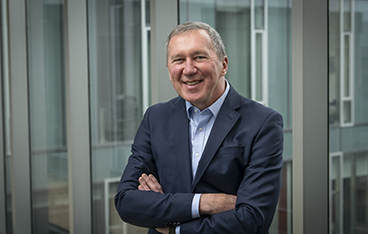
In a 2017 issue of the journal Nature, Tom Mitchell warned that policymakers are flying blind into what will almost certainly be massive economic, social and personal upheaval as a result of the rise of artificial intelligence in the workplace.
Mitchell is a leader in the field of machine learning and AI and a Carnegie Mellon faculty member in the School of Computer Science. He also co-chaired a National Academies of Science, Engineering and Medicine report on the effects of technology on U.S. employment. In his Nature article, Mitchell called for a data-intensive approach to both evaluate policy options and innovate policy responses to help workers, organizations and communities anticipate and prepare themselves for present and future automation-driven disruptions.
While much of the public conversation revolves around job replacement, Mitchell and his fellow researchers drew attention to a far more nuanced question: how do you prepare workers for a future where they work alongside robots — partnering with complex information processing systems to make decisions on how workers allocate their time and receiving guidance from algorithms.
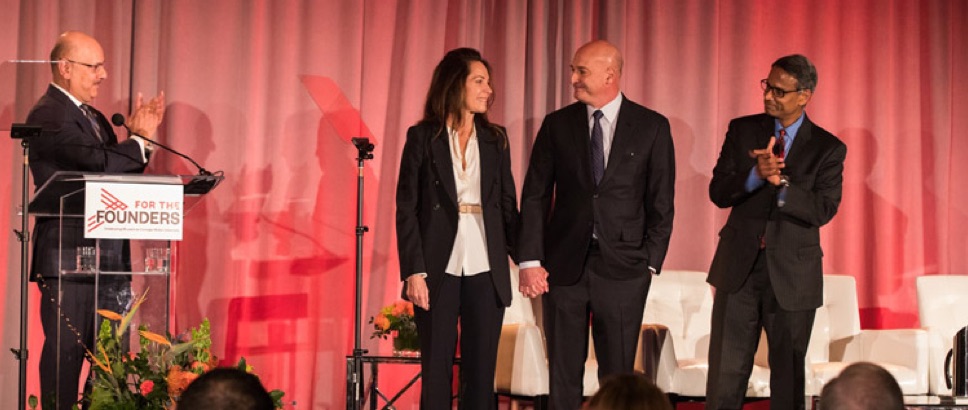
The next year, Carnegie Mellon University launched the Block Center for Technology and Society with the support of CMU Trustee and former Salesforce executive Keith Block and his wife, Suzanne Kelley, VP of Global Business Services at Oracle. The Block Center’s ambitious mission is to explore these changes in greater depth and to meet the emerging challenges. Mitchell became the center’s chief technologist.
Based in the Heinz College of Information Systems and Public Policy with collaborators housed across Carnegie Mellon’s seven schools and colleges, the Blocks’ initial investment has catalyzed a community of faculty and students and built a network among public and private sector partners who share CMU’s commitment to pioneering new approaches to workforce development.
“One of the goals that President Farnam Jahanian outlined for CMU is to be the university that leads at the nexus of technology and humanity and the nexus of technology and society. The Block Center has the capacity to convene people, bring them to campus, share where technology is headed and what it can do,” Ramayya Krishnan, dean of the Heinz College and faculty director of the Block Center, says. “The reality is that many of these technologies often automate tasks, not entire jobs. They also create new types of work. Workers need to be made aware of the new skills being demanded and provided with access to programs that enable them to acquire new skills.”
This is especially important as the pace of technological change accelerates.
“By building relationships with major corporations, labor unions, government leaders and educators, the center creates new opportunities for stakeholders — especially those that in the past have felt they need to react to new technologies once they are already in the market — to see what’s coming next.”
Preparing Hospitality Workers for a New World

Hospitality workers, ranging from fast food cooks to cocktail waitresses to hotel housekeepers, are seeing their daily tasks changed by algorithmic management and robotic assistance, replacing some jobs and transforming others.
This is occurring despite the fact that much of this work is the very type of high-touch, face-to-face service interaction that is hardest to automate, leaving many workers in the position of mediating between customers and the automated systems designed to serve them.
The Block Center — with its constellation of technologists, humanists economists and operations researchers — is well positioned to explore challenges like these.
In a one-of-its-kind collaboration, a research team composed of professors and graduate students from Carnegie Mellon, New Mexico State University, Stockton University, University of Illinois, Michigan State University and UNITE HERE, the largest hospitality workers union in the United States, is studying how hospitality work is evolving and changing. It’s also looking for ways to bring worker’s voices into the development process to help improve job safety and satisfaction in the transition to an automated workplace.
That partnership began nearly three years ago when former AFL-CIO President Rich Trumka reached out to CMU.
As a leader of the largest federation of unions in the United States and a southwestern Pennsylvania native who got his start working in mines in Fayette County, Trumka was deeply committed to carving a new path for labor — and equipping workers in a variety of fields for the future of work — by helping bring workers’ voices into the development of new technologies.
In 2018, Carnegie Mellon President Farnam Jahanian, Trumka and the deans of the Heinz College and School of Computer Science organized a summit that was hosted by the Block Center. It brought together more than 30 labor leaders from top unions across the country with CMU faculty members to discuss the future of AI and robotics.
“In addition to being one of the top research institutions in the world, the researchers at Carnegie Mellon have really impressed us with their willingness to listen to the voices of workers who are impacted by technology,” D. Taylor, international president of UNITE HERE and a summit attendee, says. “Unfortunately, most people who develop technology for the service sector don’t feel a need to engage with the people who use their products. We’ve found that CMU researchers take the voices of housekeepers, servers and other service sector workers seriously and are willing to engage with their concerns.”
Increasingly, Taylor was hearing from UNITE HERE members that they were seeing new, ostensibly labor-saving technologies crop up in the workplace at a stunning pace. Too often, these innovations were being developed and implemented without input from the workers, who often are the best suited to spot the benefits and pitfalls of new tech.

The connections that were forged at the summit led to an onsite meeting in Chicago, where Taylor connected a small group of CMU researchers, including Chinmay Kulkarni, an associate professor of computer science in the Human-Computer Interaction Institute, with some of UNITE HERE’s local union leadership from across the country.
Kulkarni is an expert in human-computer interaction whose research focuses on embedding learning and growth opportunities into a typical worker’s day. While he had done extensive research on workers in remote and online environments, the chance to extend his research work to the hospitality sector struck him as an immediate opportunity.
“We were looking at people who do things like freelance writing, programming and design, or online compliance, and understanding how they move from one career to another. But the UNITE HERE context is the polar opposite,” Kulkarni says. “I thought it would be very interesting to think about interactions that happen entirely in the physical world.”

He quickly partnered with Jodi Forlizzi, the Geschke Director of the Human-Computer Interaction Institute. Forlizzi’s work sits at the intersection of design, computer science and operations research in the service design field, which studies the waves of potential impacts of innovation on all stakeholders, whether they might be customers, employees, business owners or suppliers. She designs human-robot interaction as a service and human-AI collaborations in the domains of elder care, accessibility, human assistance and overall well-being.
Starting with seed grants from the Block Center, Forlizzi and Kulkarni, along with Sarah Fox, then a post-doctoral fellow, launched a collaboration with the UNITE HERE team and secured a National Science Foundation planning grant. Guided by their union partners and their funders, they began assembling partners from around the country to help union leadership better understand the technological forces reshaping hospitality.
“The collaborations with academic hospitality researchers from other institutions have been essential,” Kulkarni says. “I’m a computer scientist. I don’t understand how the hospitality industry works or what the cost pressures are, and those researchers help us see and understand the broader context, and what management is contending with and what workers are experiencing.”
 The newly assembled team planned to start by studying two groups of workers: Las Vegas cocktail waitresses and bartenders, whose jobs were going through radical changes or being eliminated by an automated bartending machine, and hotel housekeepers, whose work was being managed by an algorithm that directed them to move from one room to another.
“Our technology program is based on the idea that you can’t stop technology, but you can help to shape it. By working with Jodi, Sarah, Chinmay and the rest of the team, we are hoping to gain insights into how the technology works and how it impacts our members, so that we can better advocate for technologies and use cases that help make our members’ jobs safer and better,” Taylor says.
What they heard in early sessions was striking. While many workers expressed anxieties about the ways co-workers were let go, or the sense that automated systems were rolled out in a haphazard way, what they heard most frequently was concern about the way these automated systems impacted the quality of their work.
Among the cocktail waitresses, many observed that not only did the automated bartenders replace colleagues who had worked at the casinos for years, they also poured sub-par drinks. Scotch and sodas came out tasting like bloody marys, if the order of drinks was not carefully sequenced through the machine. Waitresses, who depend on tips to make their living, were spending more time coaxing drink orders out of the machines and apologizing to customers for the poor results. Many saw customers departing and going elsewhere out of frustration.
“What we heard about most often was a lack of agency, less team interaction and less time to provide high-interaction services that are a core part of their work,” Forlizzi says.
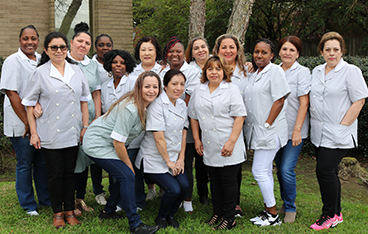
For housekeepers cleaning hotel rooms guided by algorithmic managers, they heard a similar set of challenges. Without the ability to prioritize tasks or define their own process, workers found it difficult to balance the physical load of their various tasks, from pushing a 200-pound cart from room to room to cleaning bathrooms or making beds. They also reported a severe lack of on-the-job training.
“A lot of the time, training for workforce development is reactionary,” Kulkarni adds. “We would like to create a much more proactive model for training where we are ahead of the curve, and we can co-develop technology and learning, rather than just reacting.”
Now equipped with a new, four-year NSF grant, the research team and UNITE HERE leadership are hoping to do just that. They are developing a new approach, one that brings workers, union representatives, managers and technology developers together to envision new ways to develop technologies and introduce them to the workplace.
Their vision is a four-step process that will help to understand the current state of union hospitality workers, hospitality work and automation technology; co-design technology deployment models; identify workforce needs and training materials to prepare for the future; and evaluate outcomes to understand how they impact the future of work.
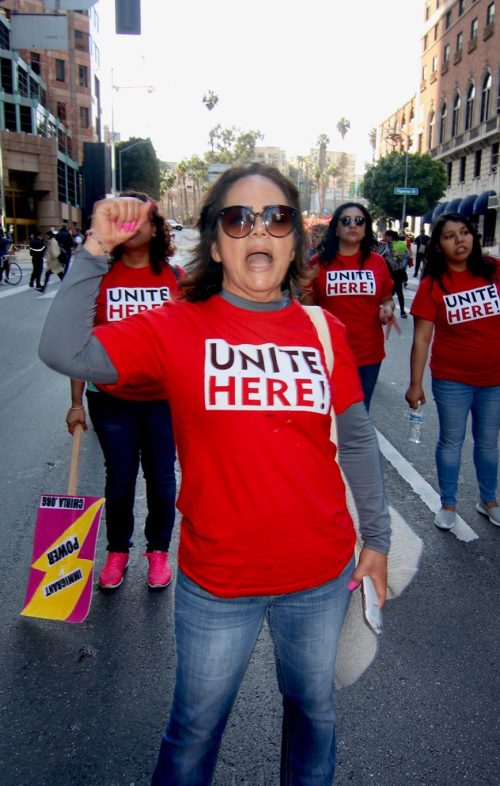
“We want to ensure that worker satisfaction, voice, safety, ownership and agency go hand-in-hand with an understanding of future technology and future work,” Forlizzi says. “Our partnership with the union gives us a unique opportunity to research, prototype and evaluate in training facilities and hotels, casinos and food service establishments, but more importantly, our focus on hospitality enables us to focus on women and underrepresented workers, and to examine the delicate balance of high-touch, human service delivery in the face of automation.”
Ultimately, the researchers and the union want to understand not only how today’s technologies work and impact union members but also the rate of technological change and its potential future impact.
“The sooner we know about and understand technologies, the better able we are to advocate for housekeepers, cooks, servers, cashiers and the others we represent,” Taylor says.
Taking the Model National
There’s a growing movement nationally to build the kinds of partnerships forged between UNITE HERE and the CMU research team into the nation’s broader research infrastructure.
Thanks to the continued efforts of AFL-CIO leaders and union members, the U.S. Innovation and Competition Act and the NSF for the Future Act both propose new ways of opening up the innovation process to workers organizations, giving workers a chance to be part of the rapid wave of innovations driving the future of work.
It’s a movement that Dean Krishnan and the faculty at the Block Center see as a potential game changer for their work, and for future technology development.
“Carnegie Mellon computer scientists, engineers and social scientists have a unique role to play in informing ways you can design, develop and deploy technologies that benefit workers,” Krishnan says. “But it takes a place like the Block Center to bring all of the stakeholders — labor, business and policy makers — to the table in order to bring that vision to life.”
Want to learn more about the Block Center?
Up Next
“Not Just for a Moment”
Read Next