

One Million Teenage Coders
With donor support, CS Academy is making an impact with a free, meaningful high school computer science curriculum
16 min read
Story Spotlight
‘Head Fake’ Learning at Lincoln High
Marguerite Imbarlina, principal of Hampton High School in suburban Pittsburgh, saw the challenges in her district, too.
“The biggest hurdle that we needed to overcome was the lack of professional learning opportunities for teachers,” Imbarlina says. “We were fortunate to have one of the best CS programs in our backyard with CMU and David Kosbie, who has experience as a high school math teacher and a CMU computer science teacher, and he was willing to work with us.”
In 2017, Lint, Imbarlina and a couple dozen other secondary-level educators pleaded their case with Carnegie Mellon University Associate Teaching Professor David Kosbie, asking for help in creating a better solution to teach computer science skills.
The teachers’ request inspired a multiyear initiative to bring the unique and transformational qualities of a Carnegie Mellon computer science education to high school students.
Today, that program is called CMU CS Academy, and with the support of generous Carnegie Mellon donors, it’s poised to have a global impact.
Step 1
Answering
the Call
“Around 2010, there was a lot more pressure building up on districts to have good computer science offerings,” Kosbie says. “Parents wanted it, students wanted it; it’s seen as the pathway to colleges and jobs.”
“But the problem was, they didn’t know how to do it. There weren’t state standards or trained teachers or standardized textbooks. Every time a new curriculum came out, it made it worse. Having more choices doesn’t help if you don’t know how to choose. It was just a mess.”
Story Spotlight
Programming that Supports Special Needs in Education
Kosbie was ready to take on ”the mess,” bringing the challenge back to his frequent CMU collaborator Mark Stehlik, director of the computer science undergraduate program, assistant dean of outreach and teaching professor.
At the undergrad level, the pair had previously designed the Fundamentals of Programming course known around campus as “112.” For an ambitious, elite student from any of CMU’s schools or colleges, taking on 112 is the ultimate test of academic excellence.
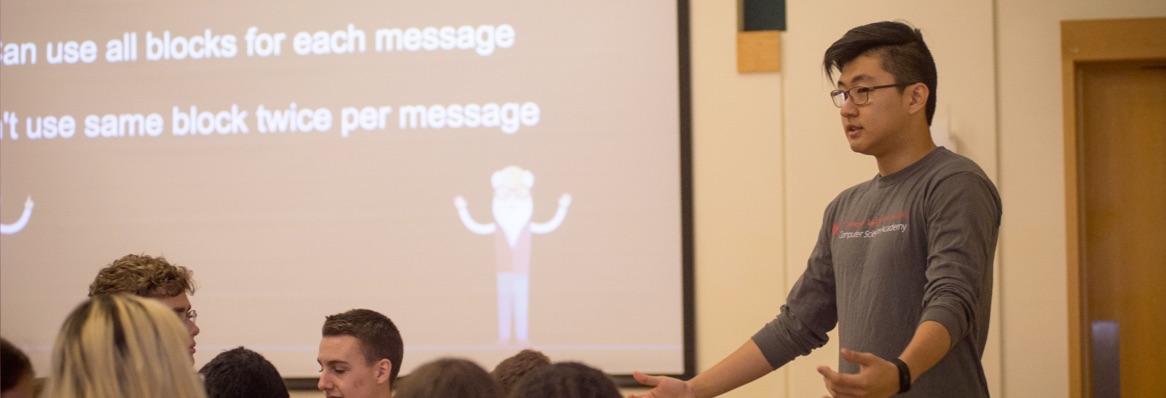
Described as everything from “culty” to “life-changing,” 112 is a class that has a unique ethos. Hundreds sign up each semester to be pushed far outside their comfort zones. About 50 teaching assistants answer student questions around the clock, and they wear distinctive, blue sweatshirts as badges of coding honor. They host hackathons, movie-themed cram sessions and even a formal event deemed the “112 Prom.”
“I think part of why 112 works is because it addresses, at its core, not just the intellectual underpinnings of computer science but also the intellectual underpinnings and traditions and history of CMU,” Stehlik says.
But high schools are a drastically different setting for computer science instruction — from student commitment, to availability of computers to internet connections, to many teachers who don’t have any formal training in how to code. The challenge Kosbie and Stehlik faced was to keep everything that made 112 something akin to instructional magic, while contending with the difficulties of teaching high school grade levels.
Most other instructional designers took a watered-down approach to course content. For Kosbie and Stehlik, there was no point in an approach that was anything less than best of breed.
“If all the students did was click through our exercises in a rote fashion, they would probably learn something, but we wouldn’t be happy,” Stehlik says. “All students should have the opportunity to engage in this wonderful discipline that I have known and loved since I was in high school.”
Kosbie and Stehlik held the same standards for the high school courses as they did for their college courses: interesting, challenging, engaging and rigorous. But keeping the ethos, and making it work for teenagers all over the world, became their new “culty and life-changing” mission.
Step 2
Compiling the Vision
for CS Academy
The earliest version of a high school CS curriculum was sketched out on a whiteboard, and the plans still hang in Stehlik’s office today. Kosbie’s and Stehlik’s proposal captured the interest of then School of Computer Science Dean Andrew Moore, who signed on with the vision to reinvent a secondary computer science curriculum. But Moore added a major caveat with his support: endeavor to reach 1 million high school students with the result. Stehlik and Kosbie agreed, while adding a caveat of their own.
“We’re going to be driven by not just broadening participation but by bridging equity divides. So, we decided we’ll be free, as in completely, utterly free: free curriculum, free training, free support,” Kosbie says.
“Capital ‘F’ Free,” Stehlik says. “When I tell a superintendent about the project, they say, ‘How much does it cost?’ And I say ‘nothing.’ And then they say, ‘I can do nothing! I’ve just got to find a teacher!’ Even schools that are under-resourced can find ways to make that happen, if they want to bring computer science into their classrooms.”
Kosbie and Stehlik set out to build the first course to teach fundamentals of the programming language Python with help from CMU undergraduates imbued with the 112 culture, and knowledge about what could work at the high school level. Sacrificing many hours of sleep to drive the highest degree of rigor and quality, the duo worked furiously to complete and pilot the curriculum within 14 months.
From a focus on relationships and support for teachers, to that all important capital-F free status, CMU CS Academy stands alone. No other curriculum on the market has been developed by employees of Apple, Google and Facebook. No other curriculum had CMU undergrads to help create written and test exercises, support teachers and share their passion for and expertise in computer science.
“Undergrads are the lifeblood of the project,” Kosbie says. “Before they graduate and go to top companies all over the world, they work for us. It’s a ridiculous wealth of talent.”
Another standout feature is that CMU CS Academy is driven by interactive graphics. Few take this approach, and none to this degree. The output of students’ coding efforts are expressed visually as shapes or pictures. They have immediate, visual feedback based on how a shape looks without having to tediously test code or laboriously peck out any bugs in it.
“We wanted to inject problem-solving throughout the curriculum, but do it subtly, so that students feel like they’re just having fun and learning in a nice, approachable way,” Stehlik says. “But really they’re being held to a higher standard and learning more important problem-solving skills, which they can use across disciplines. It has to be engaging, but also much like 112, it has to push you. We can start with simple shapes, but eventually we have to be able to get to complicated shapes and animations.”
“I still remember this kid from the first pilot; they rendered the Pittsburgh Penguins logo. It must have taken them days to get that to be as pixel-perfect as it was. And if they were investing that much effort, that’s good. That’s exactly what we want. And that is some real evidence of engagement and rigor.”
Story Spotlight
If CS Academy Works in Rwanda, It’ll Work Anywhere
CS Academy Offerings
CS0
Lightweight version of CS1 with the same interactive fun as CS1 but a smaller curriculum.
Who is it for?
- Out-of-school programs
- Middle school
- Camps
CS1
A robust introduction to programming through graphics and animations.
Who is it for?
- 8th + 9th grade
- High school
- No prior CS Academy experience required
CS2
A creative look at programming with ties to art, music and other subjects.
Who is it for?
- 9th grade and above
- High school
- CS1 required
CS3
Extends computational problem-solving skills to prepare students for professional futures.
Who is it for?
- 11th grade and above
- High school
- CS1 required
AP CSP
Extension of Code.org’s AP Computer Science Principles prep course.
Who is it for?
- AP CSP test takers
- No prior CS Academy experience required
Step 3
Debugging on the
Road to 1 Million
Since the pilot began in 2017, CS Academy has grown exponentially each year. In fall 2021, CS Academy will reach 5,000 classrooms and 120,000 students overall.
COVID-19’s impact on the 2020-2021 school year likely slowed enrollment in the program. But it also presented a unique opportunity as demand for online resources grew. From a network of remote home offices, the team built more infrastructure like translation of the curriculum into German and Spanish and virtual teacher training. Over 800 teachers trained up to deploy CMU CS Academy in their classrooms through virtual professional development sessions during the summers of 2020 and 2021, further driving capabilities to expand.
Story Spotlight
Beyond the Programming
Story Spotlight
Computer Science Curriculum: Free for All, Designed for You
Additional funding came at the perfect time as well. Seed money came from individuals, including philanthropist Seth Merrin and former Pittsburgh Steelers player Franco Harris. Bigger gifts are fueling growth on a grander scale.
“Amazon has been an amazing supporter of us, funding activities like building and deploying these courses,” Kosbie says. “We need funds like this to have maximal impact and to go out into the schools. It’s all pouring into the mission of finding, supporting and training teachers. And doing it not just domestically but globally.”
Fueling that global reach is the ability to translate all aspects of CS Academy into multiple languages. It goes beyond simply translating instructions and exercises. Writing code involves the use of English words, which is a barrier to students who don’t know them. By making fundamental changes within the platform of CS Academy, students are able to use words in their native languages to write code.
“I really believe the Spanish translation is going to be pivotal for us,” Kosbie says. “I believe that if things go right, we’ll get a million Spanish-speaking students before we get to a million English-speaking students,” Kosbie says.
What’s Next for CS Academy?
Kosbie and Stehlik are proud of the 100,000-student milestone and seem unfazed by 900,000 to go. As they’ve expertly trained their 112 students to tell you — you break down the problem and take it one step at a time.
Those steps include seeking additional philanthropic support to ensure that training and curriculum remain free. With more resources, the founders can accelerate their plans for expansion. Ultimately getting more teenaged fingers typing code by making sure teachers are well equipped to leverage the curriculum through ahead-of-class training and real-time ongoing support from CMU undergraduates who are available to field teacher questions. They will also advance their vision for additional courses that engage curiosity about computer science in different ways. These include one that ties CS principles to subjects like art and music, as well as a rigorous capstone project course for the most elite and engaged high school programmers.
Their biggest challenge is reaching into the schools and getting the word out about CS Academy.
“If it wasn’t good, it wouldn’t spread,” says Stehlik of the academy’s growth so far. “It’s spreading organically, teachers telling teachers. I think that speaks well of our intentions and our results.”
The intention is to keep getting results, and to meet those ambitious numbers. No one’s ever tried something similar before, so measuring success — for now — is a matter of intuition and instinct.
“We obsess on creativity,” Kosbie says. “Teachers tell us time and again that their students are engaged in learning a lot and loving it. We want students not just to solve the problems we give them, but to be able to invent and solve their own problems, and to create things. So it feels like we’re doing the right things and we’re headed in the right direction.”
Story Spotlight
Connecting for CS After School during COVID-19
CS Academy in Action
In just three years — and much of that time contending with the COVID-19 pandemic — CS Academy reached 100,000 students. Educators empowered with the spirit of 112 find a number of ways to help students learn CS and problem-solving skills.
‘Head Fake’ Learning at Lincoln High
Beyond the Programming
Computer Science Curriculum: Free for All, Designed for You
Connecting for CS After School During COVID-19
If CS Academy Works in Rwanda, It’ll Work Anywhere
Programming that Supports Special Needs in Education
Want to learn more about CS Academy?
Up Next
Audaciously Equitable
Read Next
Connecting for CS After School During COVID-19
An odd thing happened to the curriculum designed to be taught traditionally, live in schools. In 2020-2021, CS Academy made connections virtually, through programs led by CMU undergraduates to support kids and teens after school.
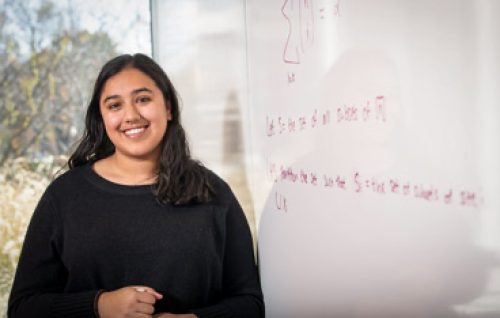
The original plan, and the pandemic revision, are driven by a lightweight version of CMU CS Academy, with support from the university’s student organization Teknowledge and its president during the 2020-2021 school year, Harlene Samra.
The lightweight CS Academy is known as “CS0.” It packages an introduction to Python programming that’s designed to be used with younger kids (grades 7 or 8) in less structured settings, like an after-school program. Teknowledge, a CMU student club, supplies volunteers who support the curriculum when programs lack an on-staff expert. A team of mentors was set to work with kids at the Shadyside location of the Boys & Girls Clubs of Western Pennsylvania, when COVID-19 closed club doors.
Samra pivoted the learning online and helped a group of dedicated kids to learn coding.
“They didn’t have to be on Zoom talking to us in order to learn,” Samra says. “They could look at their own screen, go at their own pace and just use us as a person to lean on.”
“I think it just gave them something fun to do on their computer while also learning. Even though it was online, it was online in a way that made it fun.”
Computer Science Curriculum: Free for All, Designed for You
Currículo de las ciencias de computación: gratis para todos, y diseñado para usted.
“I’m working on getting CS Academy into as many countries and as many hands as possible because it’s all about who has access,” says Sofia De Jesús, associate program manager with CMU CS Academy.
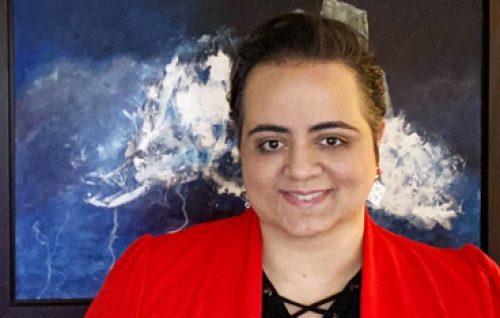
She joined Carnegie Mellon’s CS Academy team in March 2021 to expand the adoption of the curriculum across the Spanish-speaking world. It’s all part of the drive to get one million students using CS Academy. Moving beyond the English-speaking world will be critical to that goal.
De Jesús is able to expand upon the infrastructure work the CS Academy team did in 2020-2021. CMU CS Academy is built on a platform that was programmed to include a native language in a fundamental way. All exercises and instructions are translated of course, but the students also will be able to write code using their native language commands. This removes the barrier to knowing English words and language to learn computer science.
English-speaking schools have a hard time finding teachers who know coding, and for Spanish speakers, the barrier is often two-fold: a teacher also needs to know English to understand the instructional materials. CMU CS Academy removes this barrier, and De Jesús led professional development sessions for teachers completely in Spanish for the first time during summer 2021.
“Our mission is to make things accessible and make it in a way that is meaningful and feels important,” De Jesús says. “Social justice is everything that’s going on and making sure that people have access to everything. If you’re only giving access to curriculum to a certain part of the population, that’s not social justice. That’s not equity. And that’s not fair.”
Beyond the Programming
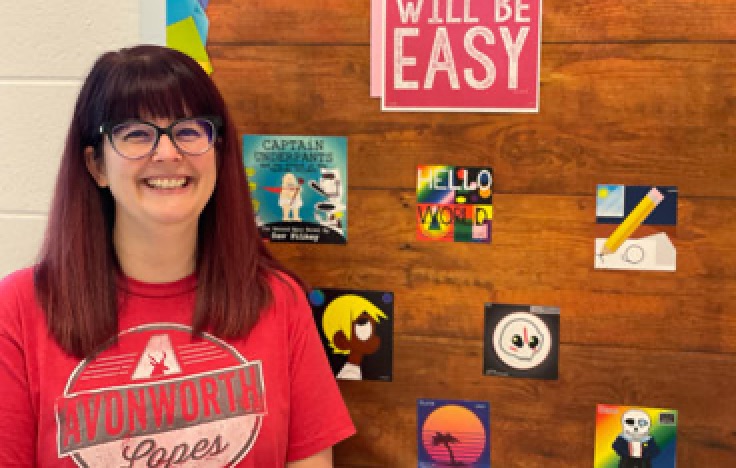
“We are all influenced by computer science every single day, through algorithms, the apps we use, Facebook and surfing the internet,” says Jeff Hadley, Avonworth School District’s superintendent. “All these things are impacting us on a daily basis, so it just makes sense that we’re making sure our students have exposure to computer science.”
His team finds so much value in teaching computer science that Avonworth made the class using CMU CS Academy a requirement for every single student to graduate.
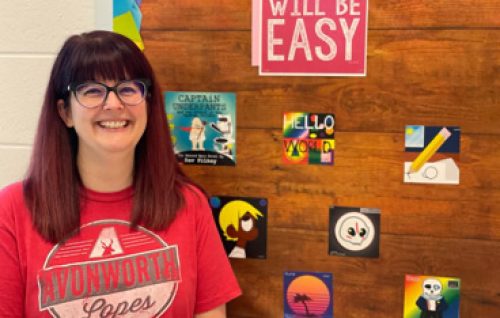
As part of that commitment, the district added Jill Shumaker to their small-but-mighty teaching roster. With an average graduating class of about 150 kids, any addition of teaching staff is a big deal for this small suburban Pittsburgh district. Since starting in 2018, she’s seen immediate success with kids who value what she teaches, regardless of their intent to keep studying the topic.
“I see an increase in confidence, and the ability to think through problems,” Shumaker says. “I have a student who is going into our automotive career training program. And he said to me, ‘You taught me how to think. This is big. This is real world! So many of our classes don’t teach us skills that are going to translate into the real world, but this class does.’ I said, YES! That was a huge win for me that he got it as a ninth-grader, that it wasn’t just about programming.”
If CS Academy Works in Rwanda, It’ll Work Anywhere
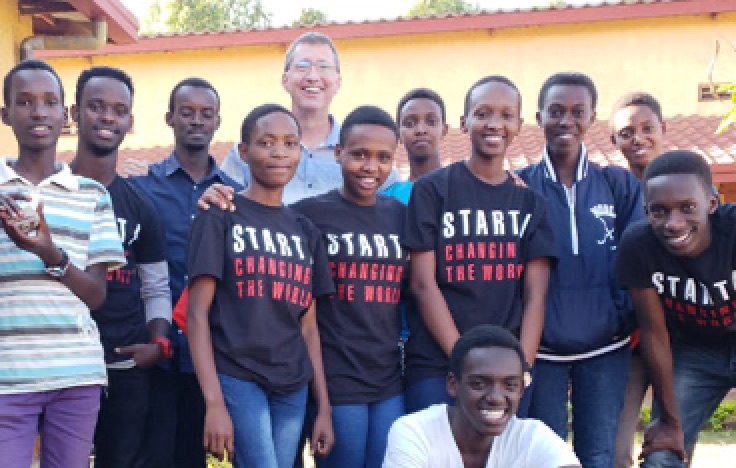
Most of the schools that participated in the first pilot of CMU CS Academy were located in western Pennsylvania near Carnegie Mellon’s campus. But one outlier lays very far out: in Rwanda at Agahozo-Shalom Youth Village. Known as “ASYV,” the village serves orphaned and vulnerable Rwandan youth who are empowered to overcome the effects of war and genocide.
CMU CS Academy was used as part of the mathematics, physics and computer track and taught by Egide Kamuzinzi Nizerimana. His students caught on immediately, including one young woman who was weak in programming at the start but progressed quickly using the curriculum.
“It helped her to know what she was doing and understand how she was learning,” Nizerimana says. “She brought the skills from CS Academy and used them in other classes.”
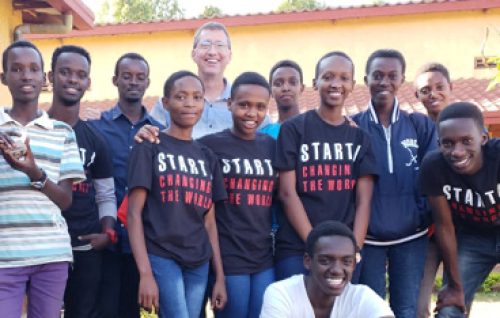 CMU CS Academy co-founder David Kosbie was able to visit ASYV and see the engagement.
The students wanted to keep doing this work after hours. In the evenings, they’d go back up to the school,” Kosbie says. “At the end of my trip, they sent someone down to send my driver away, so I couldn’t go back to the airport: they wanted me to stay. We can’t be missing the mark when these kinds of things are happening.”
The things happening at ASYV have been prolific. Of the eight students that completed CS Academy in the pilot year, seven received full scholarships to top universities in Rwanda and the United States. The eighth student went directly into professional work as an applications developer.
“This is invaluable for our most advanced students who wish to pursue studies abroad as well as positively influencing all students, sparking interest in thinking about what their lives might be like beyond ASYV,” says Nizerimana.
Programming that Supports Special Needs in Education
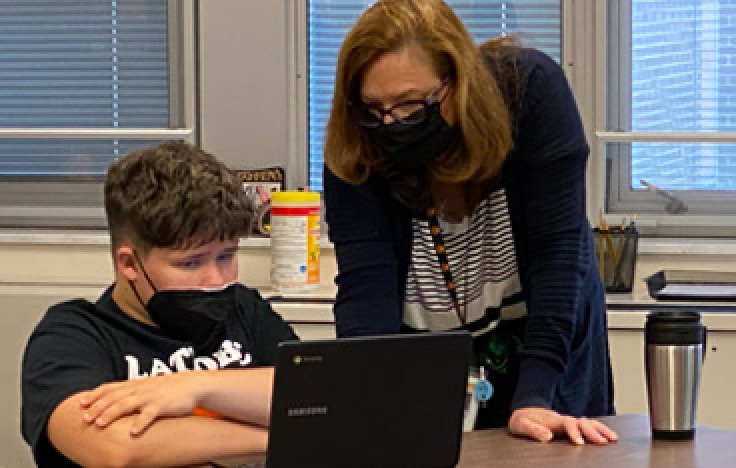
Wendy Lint teaches a variety of computer and programming classes for high schoolers in the Greater Latrobe School District. Dedicated, driven and, initially, very frustrated, she was one of the original teachers who pressed founders David Kosbie and Mark Stehlik for a high-quality option to teach computer science. The CS Academy curriculum not only solves that issue, but addresses another big need in education: benefiting every student, at every level, including those in need of educational support.
The CMU CS Academy curriculum is highly visual, which naturally lends itself to different learning styles and also helps students for whom English language comprehension is a struggle. Each of the CMU CS Academy lessons and activities includes documentation and examples. For a student who doesn’t grasp the concept the first time, they can revisit the material and spend more time taking in the concept.
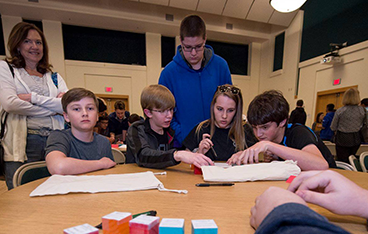
“I have the opportunity to teach not just programming, but also to help reinforce understanding of the English language through lessons and exercise directions written into the curriculum,” Lint says.
She sees students grow in their abilities to read, comprehend, understand sentence structure and even tackle word problems in a math context. Even after completing just one or two units of the course, Wendy sees benefit for all kids.
“It helps you to problem solve,” Lint says. “You’re honing comprehension skills and training your mind to think. Anybody can learn to code.”
‘Head Fake’ Learning at Lincoln High
Teacher Keith Golebie uses CMU CS Academy in his small-town high school in Ellwood City, Pennsylvania. CMU CS Academy drives problem-solving and computer science instruction for introductory, intermediate and AP programming and computer science classes at the school. It’s the curriculum that jumpstarts his ability to teach the topic, but it’s the curriculum’s graphic interface that jumpstarts kids’ interest in his programming classes.
“It’s ‘head fake learning,’ to use a term from Randy Pausch in his ‘Last Lecture,’” says Golebie, referencing Pausch’s theory that learning is powerful when it’s fun in disguise. “It’s a chance to make something happen instead of having to write lines and lines of code first. In just a couple of seconds, something is actually moving across the screen. That’s powerful. It creates an opportunity for kids who would never consider programming as an option otherwise.”
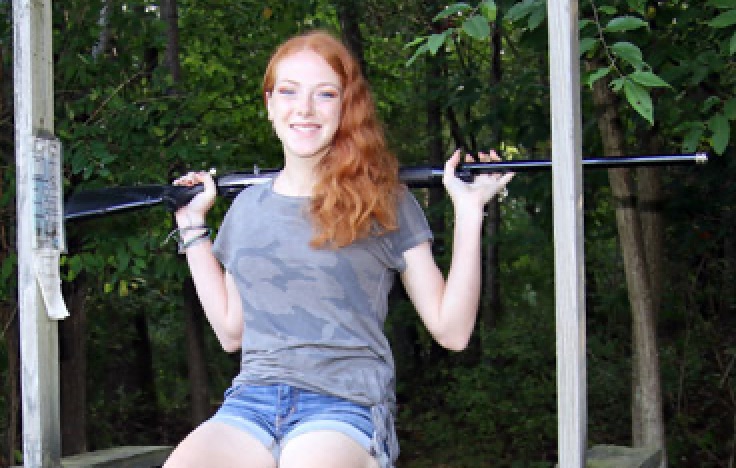
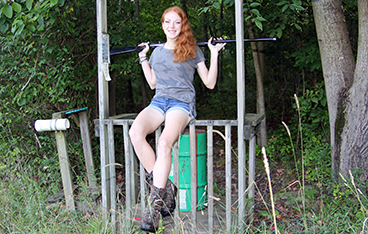
One of Golebie’s kids is recent graduate Emily Borroni. For her capstone programming project, Borroni combined programming skills with another interest: competitive shooting sports. Borroni is a three-time sporting clays state champion. Taking inspiration from vintage arcade games, she used her Python programming knowledge to create a first-person shooting game that simulates her point of view as a sports clay shooter. Emily plans to build upon her skills in college with the goal of creating advanced prosthetic limbs.
“I’m going to focus on prosthetics that function like a real body part and program them to work with nerves,” Borroni says.