

Engineering Impact in Africa
A historic partnership is helping to prepare Africa’s next generation to lead its digital revolution.
10 min read
Africa has the youngest and fastest-growing population in the world. The Mastercard Foundation estimates that by 2030 there will be 375 million young people in the job market in Africa, and that number is expected to grow to more than a billion people within the next few decades. Young people in Africa represent the workforce of tomorrow and will lead Africa through a digital transformation — if they have the skills and knowledge to participate in and build the economies of the future.
That’s where a partnership between Carnegie Mellon University in Africa and the Mastercard Foundation comes in.
Below meet four extraordinary Mastercard Foundation Scholars at CMU-Africa — Ofentse Phuti, Israel Oladejo, Ayobami Esther Olanrewaju and Furaha Benedict — who are creating a bright future for their communities, their continent and our world.
- Ofentse Phuti (ENG 2023)
- Israel Oladejo (ENG 2022)
- Ayobami Esther Olanrewaju (ENG 2022)
- Furaha Benedict (ENG 2023)
Focused on Leadership
Botswana native Ofentse Phuti was excited that she could remain close to her family while earning a world-class STEM degree. And thanks to her acceptance into CMU-Africa’s Mastercard Foundation Scholars program, she found an education perfectly aligned with her goal: to become a transformative leader who actively contributes to her community.
She has embraced the program’s focus on leadership development, career preparation and community service, participating in several programs that have taught her the importance of working on a team.
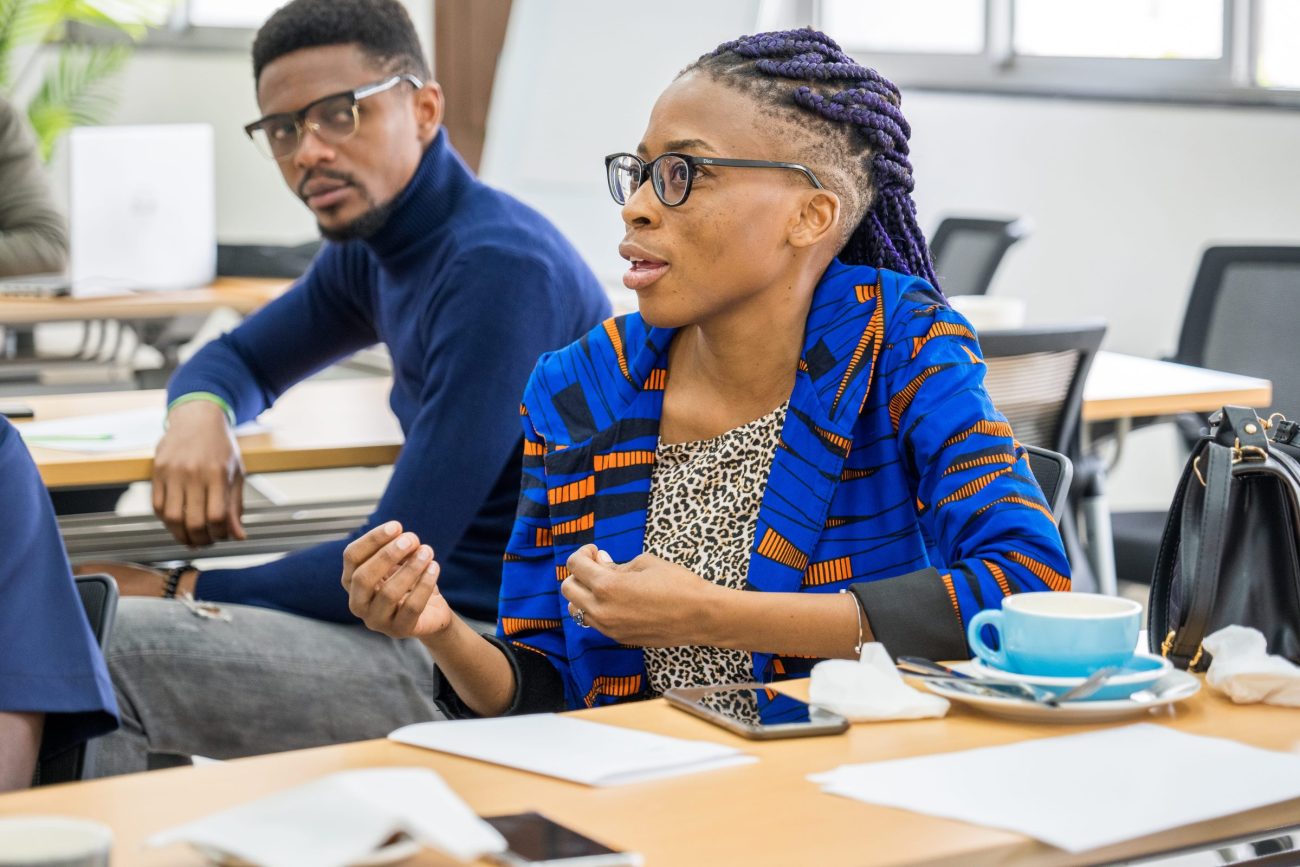 Ofentse is already contributing to solutions for real-world problems. As a data science intern with ENGIE Energy Access, she is building a credit score model for people who either don’t have access to electricity or haven’t historically been able to afford it. As a research intern with CyLab-Africa, she is focusing on a malaria-identification project.
“The leadership programs have helped me understand who I am. And then knowing who I am, I am better able to interact with other people,” Ofentse explains. “I have learned that I’m not just a human being, but a human being amongst other human beings.”
Ofentse participates in virtual “hackathons” to gain more experience working in teams to solve complex challenges like financial inclusion and is the co-organizer of Gaborone Women in Machine Learning & Data Science, which hosts talks by women and gender minority individuals working in data science or machine learning.
As she anticipates graduation, Ofentse is looking at machine learning careers where she can develop applications in financial technology and health care.
Farm-to-Startup
Israel Oladejo is ambitious and eager to be a changemaker. After earning his master’s degree in information technology and applied machine learning in 2022, he founded Animal Solution Feedmill, a startup that aims to produce animal-specific feed for livestock to reduce cost and improve the efficiency of farms.
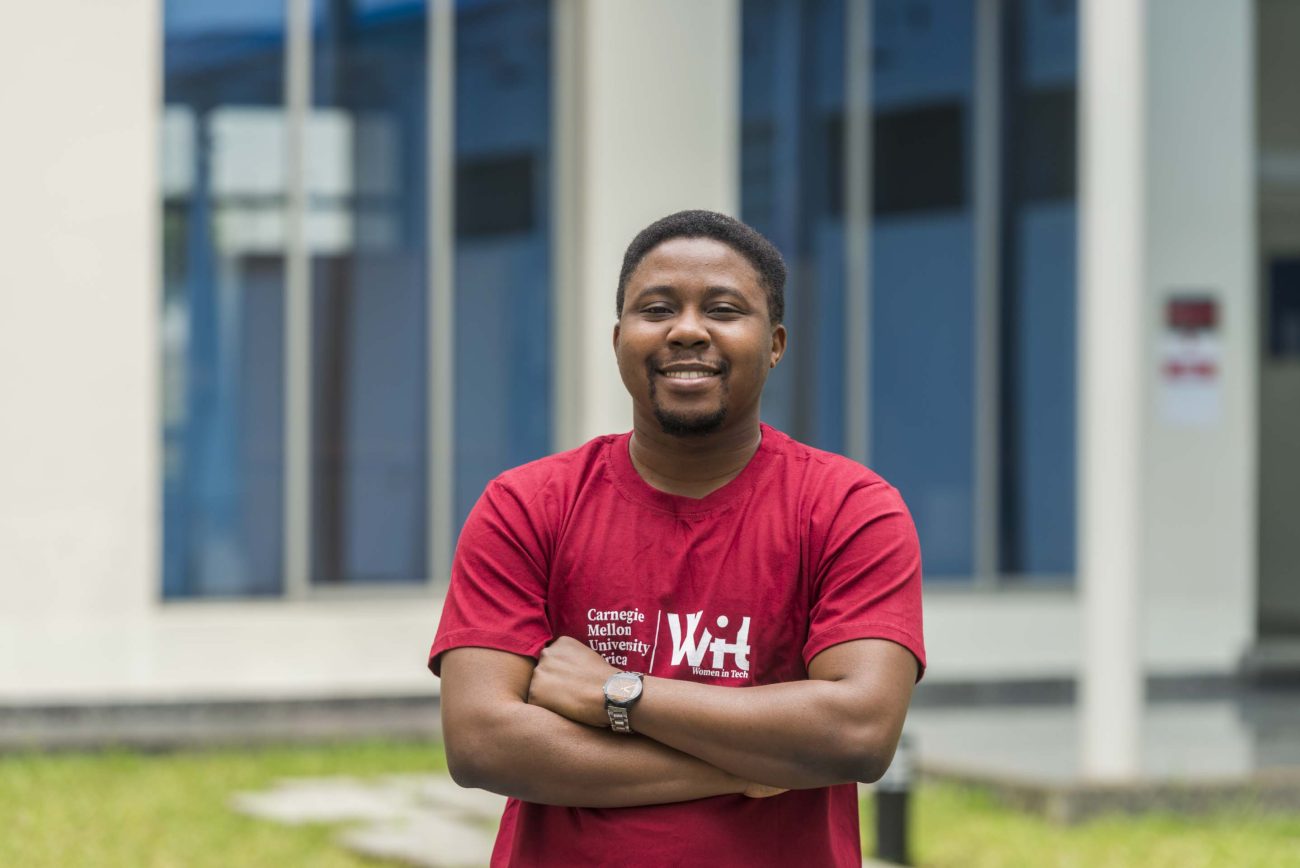 “Feeding accounts for 70% of the total cost of livestock production in Nigeria,” Israel says of his home country. “The goal was to promote animal farming and nutrition and reduce the cost of livestock production. That was what led me to start the organization.”
As a Mastercard Foundation Scholar, Israel benefited from leadership training, such as personal branding and emotional intelligence programs, that helped him learn how to work in multicultural environments.
“Some of my superpowers are problem solving and empathy,” he says.
He also was able to tap financial and technical support designed to help Scholars develop successful entrepreneurial ventures, receiving a grant to launch Animal Solution Feedmill. He plans to continue his education by pursuing an MBA in digital technology to expand on the knowledge he needs to build his company.
“Thanks to my education, any time I see a product or a solution I think about how it is helping the community and solving what it is meant to solve,” Israel says. “Because of the experiential learning, the industrial exposure and guest lectures, this education was like a complete package.”
Research-Driven Change
Thanks to the Mastercard Foundation Scholars program, Ayobami Esther Olanrewaju achieved her dream of attending Carnegie Mellon for graduate school — without traveling halfway around the world. And she’s devoted herself to taking the knowledge she gained in her education to help others.
“I always wanted to go to CMU, and when I saw that students in Africa could take the same courses, I knew it was a perfect match,” Ayobami remembers.
 As a student, she conducted research, completed an internship with Ugandan company Assak, which makes small loans to entrepreneurs and farmers, and served as an active member and leader of several student groups, all while maintaining a near perfect GPA. She served as president of the CMU-Africa Women in Tech club, which encourages and engages young African women in information and communications technology.
Ayobami, who became a mother just weeks before her graduation, understands the many challenges African students face — whether it’s girls who are afraid to pursue the information technology field or young women who are unsure how they will balance career ambitions with their important family commitments. In 2021, she and other Mastercard Foundation Scholars organized a two-day virtual Information and Communication Technology boot camp for undergraduate students who wanted to improve their skills in Python programming, data analytics and Microsoft software.
At graduation, Ayobami was awarded the Lakshmi Subramanian CMU-Africa Student Excellence Award, which is given to students who inspire their classmates through their intellect, achievement, engagement and character.
Community First
It happened almost by accident that Furaha Benedict came to study information technology as a Mastercard Foundation Scholar at CMU-Africa. Since childhood, she knew that making positive change in the world would be part of her life’s work. Her first ambition was to become a physician, but her native Tanzania already had many doctors. Her second choice, civil engineering, also did not pan out when there were no undergraduate spots in her country’s universities. She found an opening to study computer science and gave it a try. She came to love the adaptability of the field.
“I just felt like I found myself where I wanted to be, because I was like, ‘OK, this is a place where I can also still make an impact because as a programmer, or anyone invested in technology, I can work in any sector I want,’” Furaha says. “I could create solutions for any of the sectors I dreamed to work in when I was a child.”
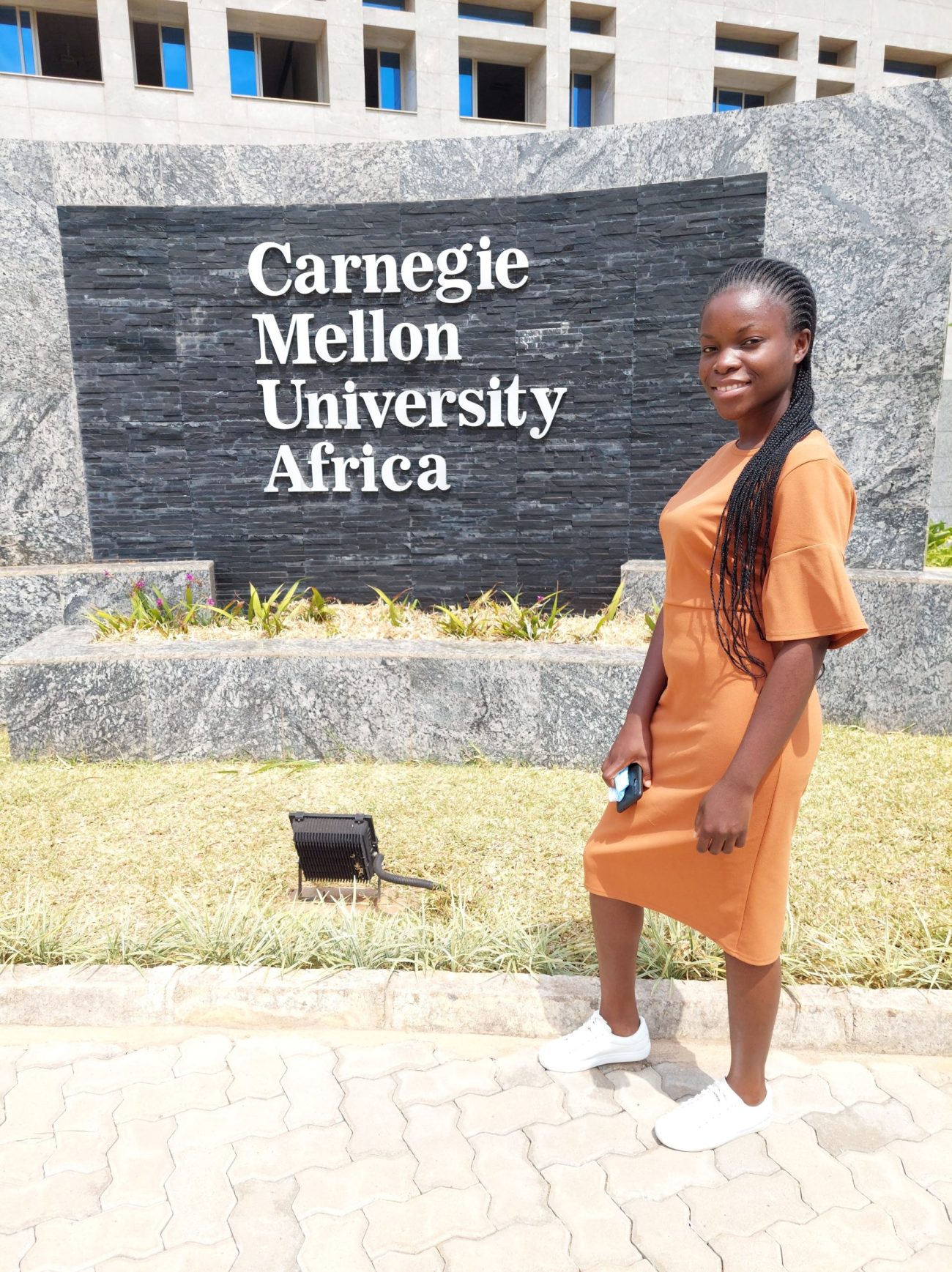 Computer science also piqued an interest in programming and design in her, and it opened her eyes to how information technology could help her community.
Her master’s degree experience has been a marriage of her academic interests and personal values. The curriculum places equal emphasis on hard skills, like research methods, and soft skills, like emotional intelligence, in rigorous classes and community-oriented projects, often designed by the students themselves.
One class project required Furaha to do field research on local agriculture. It wasn’t interpreting the results that challenged her, but rather optimizing a connection to the community so that her research model was useful and addressed what people needed.
As she reaches the end of her master’s program, she is studying at CMU’s Pittsburgh campus and is considering becoming an entrepreneur or joining an existing company, possibly as a data scientist or a software engineer. Wherever she decides to go, her values will continue to lead the way.
Ready to learn more about equipping global leaders?
Up Next
From the Campaign Chair
Read Next