

Audaciously Equitable
The Center for Shared Prosperity is changing the relationship between a university and its community
10 min read
For additional insight about The Center for Shared Prosperity, listen to the “We Can Be” podcast episode, hosted by The Heinz Endowments, featuring a conversation between Oliphant, Nourbakhsh and Requeeb Bey, Center for Shared Prosperity community advisory committee member and executive director of Black Urban Gardeners and Farmers of Pittsburgh.
If the collective talent at Carnegie Mellon partnered with community leaders, what kind of change could we drive?
That’s a bold question, and the answer is university’s new Center for Shared Prosperity. The center convenes stakeholders and problem solvers, infuses resources and will ultimately help implement solutions. The sweeping new initiative could have stunning implications for economic equity and social justice — and the Pittsburgh-based Heinz Endowments is putting its support behind the center’s work.
Creating the Center for Shared Prosperity
Heinz Endowments president Grant Oliphant sees a big problem. Research institutions are packed with the smartest people and the biggest ideas, but that intellectual wealth is not shared often enough with local communities and neighbors.
Illah Nourbakhsh, K&L Gates Professor of Ethics and Computational Technologies at CMU’s School of Computer Science, sees the same problem from a different angle.
“One of the challenges that we have as an innovation creator is that our innovations help society, but they also exacerbate inequalities because the new tools belong to the most privileged and the most prosperous in society,” he says.
Oliphant and Nourbakhsh were pondering these problems separately. But when Oliphant and the Heinz Endowments funded one of Illah’s CMU projects, a melody found its harmony. That music could change the world.
“A relative handful of major research institutions, Carnegie Mellon among them, are literally inventing the future, with significant global benefits and impacts,” Oliphant says. “We wanted to see if Pittsburgh could reinvent that paradigm, and Carnegie Mellon — with its long history of tackling real-world problems — has risen to the challenge.”
In April 2021, The Endowments announced its largest grant to date, a $30 million gift to create and sustain the Center for Shared Prosperity, housed in the Dietrich College of Humanities and Social Sciences. At the macro level, the center will do three key things:
- Change the relationship fundamentally between CMU and its community, from distinctly separate entities to partnerships that work in concert.
- Give community stakeholders agency when it comes to university projects.
- Create a local and, ultimately, national model to address social barriers to equity.
The center has created a new model of collaboration, uniting the expertise of both the community and the university. A Center Community Committee has been recruited and charged with identifying specific equity, economic and social justice challenges in the Pittsburgh region. The committee is composed of Western Pennsylvania community organizations and residents; CMU faculty, staff and students; and Heinz Endowments staff.
Then, working groups of community members and CMU participants partner to study the selected issues, identify structural barriers to opportunity, and develop and implement innovations that address them. These innovations will be piloted, and ultimately scaled up to create real change for the region’s residents. An important ingredient for the initiative’s future success is the marriage of community members’ lived experiences and skills with CMU expertise in areas such as data science, public policy, technology, humanities and the social sciences.
This new entity within CMU realizes the wildest dreams of Nourbakhsh, the center’s inaugural executive director. Right now, the center’s staff is launching planning committees to tackle its first three initiatives:
- Increasing home ownership, especially for members of Pittsburgh’s minority communities, through housing cooperatives that break down initial/frontline barriers to securing mortgages.
- Improving options for halfway homes, which help formerly incarcerated individuals make successful transitions back into communities.
- Developing advocacy skills through a “power of education” project, which will empower community members to identify their own needs, as well as voice their preferred solutions.
“We hope it [the center] will send a signal to peer institutions nationally and globally that they have a role in making sure the prosperity they help create is shared more broadly and equitably. Worsening inequality and social inequity are not inevitable byproducts of innovation, only failures of intention and imagination.”
“We realized we could actually have a moral place in which we can take our own innovation, talents and skills, and turn them toward reducing the structural barriers that exist to equity,” Nourbakhsh says. “Over years and even decades, we’re reimagining the relationship between the university and the community around us ”
With experience as a boots-on-the-ground community organizer, Marlene Williams, director of operations for the center, sees the need for long-term involvement between these two worlds that are often working in parallel rather than in partnership. “The Center for Shared Prosperity is a space where you can build capacity within organizations and communities,” Williams says. “Communities deserve to benefit from the university that is in their backyard every day, and we hope the center will create a place for communities to get support and see change happen.”
Shared Prosperity in Action: RentHelpPGH
Explore
While the center is new, its approach is familiar to anyone who knows about Nourbakhsh’s work with CMU’s CREATE Lab. The lab is focused on technology and using it to solve community problems. One of the lab’s hallmark projects is EarthTime, which combines mapping and geography with large, complex datasets to visualize patterns. Building the platform was an academic exercise but once the tool was in place, it has been used for everything from understanding climate change on a global level to examining home ownership by race and over time in a single city.
Anne Wright, director of community mapping and engagement at the CREATE Lab, knew about an underutilized set of data that used EarthTime to visualize Pittsburgh-area housing issues. When COVID-19 started, Wright realized the data could illuminate pending evictions with enough time to help people avoid them. Working with community partners, her team gathered information about eviction filings and hearings from local court websites every day. Then, they worked with a variety of local organizations and volunteers to act on the data by informing tenants of their rights and linking them to programs that could help them to stay in their homes. The project turned into a new, independent nonprofit with its own small staff — and a big mission — to use data to save people’s homes.
“I could see the evictions in real time, but I couldn’t do much about it,” Wright recalled of the days before RentHelpPGH came online. Now, they send information within a few days of flagging an issue.
“The first thing we do is make sure they know they’re being evicted,” Wright said. “Then we let them know that, OK, so the landlord taped something to your door — that doesn’t mean you’ve been evicted. It’s just the first step in a long process.’”
Wright estimates RentHelpPGH and partners have helped around a thousand people and their families. For Nourbakhsh, it’s a model for much more progress to come.
The CREATE Lab work is a nice example of the vision for the Center for Shared Prosperity,” Nourbakhsh says.
“What if we could solve not just one problem but dozens of problems? The CREATE Lab has been doing that for years with just 30 people. This center proposes to really let us take the entire institution of Carnegie Mellon and help it show leadership through a new kind of relationship with the community.”
What is so different about the Center for Shared Prosperity model?
The Big Question
What is a university’s role in equity?
A Shared Prosperity Vision
Universities inadvertently contribute to inequities, and through this center, academics will get training to recognize and mitigate unintentional bad side effects.
From the Executive Director
“We’ll provide professional development tools that help teach people the historical context of the role universities like CMU have played in things that influence equity, like gentrification. And, how can we know more and do better moving ahead?”
The Big Question
How could the university and community work better together?
A Shared Prosperity Vision
Universities and communities are partners, with universities actively looking for ways to empower communities and follow their lead.
From the Executive Director
“I want to show what could happen if we took information — that new thing that is the currency of our life now — and turned it toward the populace, toward the citizen, toward the community to provide power to those who actually deserve power.”
The Big Question
Where do ideas come from and who has the solution?
A Shared Prosperity Vision
Communities are their own experts. Through the center, CMU’s role is to connect and support. Projects will be chosen and launched by a community cabinet of leaders, experts, residents and non-CMU stakeholders.
From the Executive Director
“We need to step out of a position of privilege and meet them eye-to-eye to find solutions together. If you think you have the solution, that means you tell communities what they need. What we’re really giving people are tools for capacity building.
We don’t want people coming to us and saying, ‘We have this really cool hammer, can you find us some great nails?’ We want to upend that kind of power relationship. We want our community cabinet — in association with groups on the ground, the residents, people who have real-world experiences — to come up with lists.”
The Big Question
Where does project funding go?
A Shared Prosperity Vision
A funded endowment ensures that money is available on an ongoing basis for projects, securing support from beginning to the very end. The community is uplifted with funds that are flexible and ongoing.
From the Executive Director
“We want to get to the point where we can say, ‘It’s going to cost this much. We need at least as many years of funding dedicated to this.’ And, these are the community centers, the residents and people inside and outside of CMU that need to be involved in this idea as it matures into a full blown project.’”
The Big Question
How can students get involved?
A Shared Prosperity Vision
Students bring their ideas for a community project, are paired with a faculty/technical advisor, and it’s funded through the university and structured as an internship.
From the Executive Director
“Today’s students come into my office, sit down and say, ‘I’m getting this computer science degree, but I don’t want to go work at a company and help them optimize ad revenue and get wealthy. How can I help my community out?’ This is what’s happening in this post-millennial generation of students. There is a hunger for them to look at the world that they see full of injustice and ask the question, ‘How do I make it more just?’”
Shareholders in Prosperity
Part of the power behind the Center for Shared Prosperity is the team launching it and supporting it in the future. These are just a few of the people making it happen.
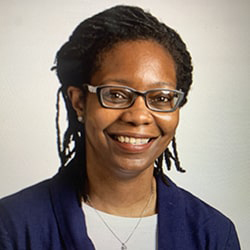
Marlene Williams
Operations Director, Center for Shared Prosperity
Role: Program management and implementation
“A goal for the university is to break down the invisible wall that keeps people away that can benefit from equal opportunities and bring a path to share the prosperity that the Pittsburgh region deserves.”

Jarrion Manning
Documentarian, Center for Shared Prosperity
Role: Telling the stories of social change
“I’ll be looking to find ways to share this journey with the world, so that hopefully, the community-oriented energy that we are approaching this project with will become contagious.”
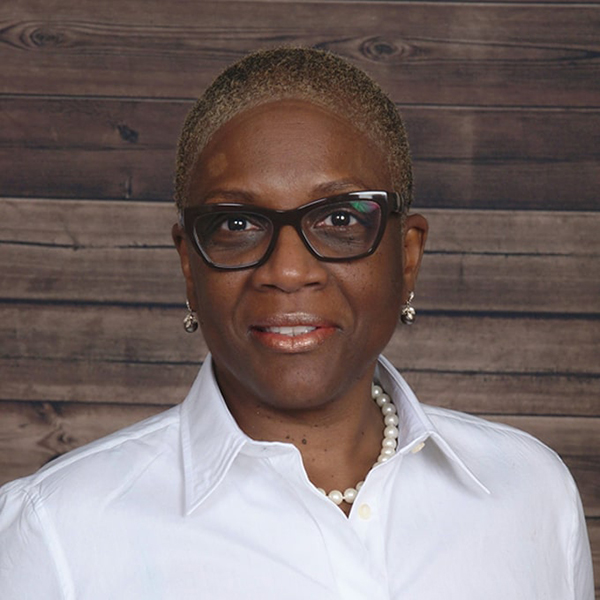
Terri Shields
Executive Director of JADA House International Inc.
Role: Member of the Center Community Committee (C3)
“Through the Center for Shared Prosperity, I hope we can come together and show other communities that we did it. We may not always agree, but we’ll respect each other’s opinions, get done what we need to do for Pittsburgh, and set an example for other cities.”
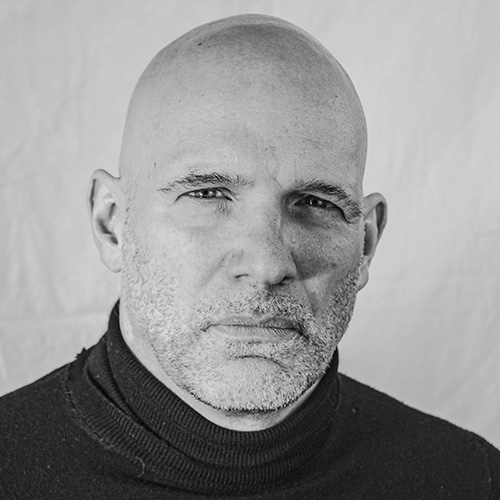
Taris Vrcek
Executive Director, McKees Rocks Community Development Corporation
Role: Member of the Center Community Committee (C3)
“It’s a really diverse group of perspectives that are part of the Center Community Committee, and what’s interesting are the commonalities that are coming out. My hope is that I’m able to bring my expertise to the table of what’s happening on the ground, and I’m able to bring catalytic investment back to my community. At the same time, these issues around equity are systemic, so I also hope that with a name like CMU, we can begin to dismantle these systems.”
Want to learn more about the Center for Shared Prosperity?
Up Next
Equipping Workers for the AI Future
Read Next
Yes! I want to learn more about CMU's future.
Submit your questions, comments or interest about Make Possible: The Campaign for Carnegie Mellon University using this form, and a CMU representative will be in touch soon.
"*" indicates required fields