

Opening Doors to Opportunity
CMU’s SAMS program creates transformational pathways for high schoolers
10 MIN READ
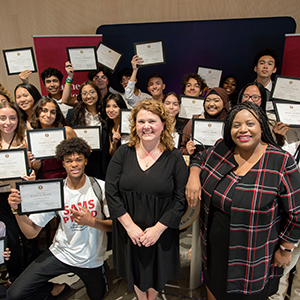
You’d expect a college campus to feel quiet during the summer. But at Carnegie Mellon University, talented teenagers from diverse backgrounds across the world call campus home for five weeks as part of the Summer Academy of Mathematics and Science pre-college program, or SAMS. The students come to ostensibly explore STEM disciplines, but below the surface it’s much more. For decades, it’s been a defining experience that opens up new pathways, changes lives and creates opportunities in a fundamentally powerful way.
Careers in STEM (science, technology, engineering and math) are among the highest paid and most in demand. Well-resourced high schools in the United States prioritize these subjects in their curriculums. But for high schools with limited resources — and the overly represented minoritized students who attend them — access to advanced instruction in math and science is often inadequate to prepare students for a technology-driven future.
The educational disparity amounts to a locked door, with opportunity on the other side. If a student can’t gain foundational knowledge in high school (or earlier), they’re behind their better-resourced peers. Admission to top colleges is hard to achieve without the academic basics, and those students who earn admission may not have been fully prepared by their previous schools for college-level courses. Because of this, well paid, in-demand careers in STEM become impossible to access. That’s the equity problem that SAMS is key to solving.
“These high school experiences help students to do a deep dive into math and science and really uplift their scholarship,” says M. Shernell Smith, associate dean and executive director of CMU’s Center for Student Diversity and Inclusion, which administers the SAMS program. “With access to world-renowned faculty and the SAMS network and experiences, we’re elevating their competencies, their skill sets, their math confidence as well.”
Uplifting scholarship was a major focus when the program started in 2001, and Damian Dourado, director of student academic success for Carnegie Mellon University in Qatar and a member of the SAMS founding team, is proud to see that continuing 20 years later.
“I know of a student who completed the program last summer, and she expressed the same experiences we felt were important when we originally started SAMS,” Dourado says. “She gained accessibility and exposure to fields that some students in high school will not have the chance to understand, with hands-on experience of what it is like to work on a mechanical engineering project or in robotics or so many other STEM disciplines. It warms my heart to see that in 2022, we’re still impacting students the same way we did in 2001.”
The SAMS Experience
The SAMS program attracts about 1,500 applications for 75 spots each year. A strong interest in STEM topics is required but, recognizing the access barriers, previous experience in the field is not. Passion is valued, and the selection team undertakes a deep review into each application to uncover the applicant’s individual story and select a cohort of high school juniors and seniors for whom the program promises to be transformational.
The experience is truly priceless because SAMS has no cost for participants.
“Demonstrating a need for financial assistance is one of the selection criteria for this program,” Smith says. “We cover additional expenses that make this possible for kids and their families, and we include topics like SAT prep or admissions coaching that make a huge difference but aren’t affordable.”
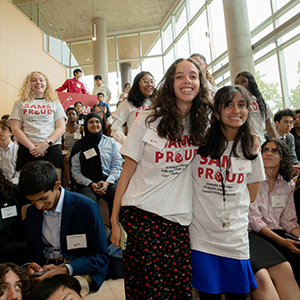
The first sessions of the program are scheduled online shortly before students arrive on campus, serving as a virtual jumpstart to build skills and connections ahead of the main event: For five weeks in July, each year’s cohort of 75 students moves into campus housing to live and learn at CMU. Welcome weekend activities focus on creating immediate bonds between participants and program facilitators. Most come to consider each other a family at their “home away from home,” Smith says.
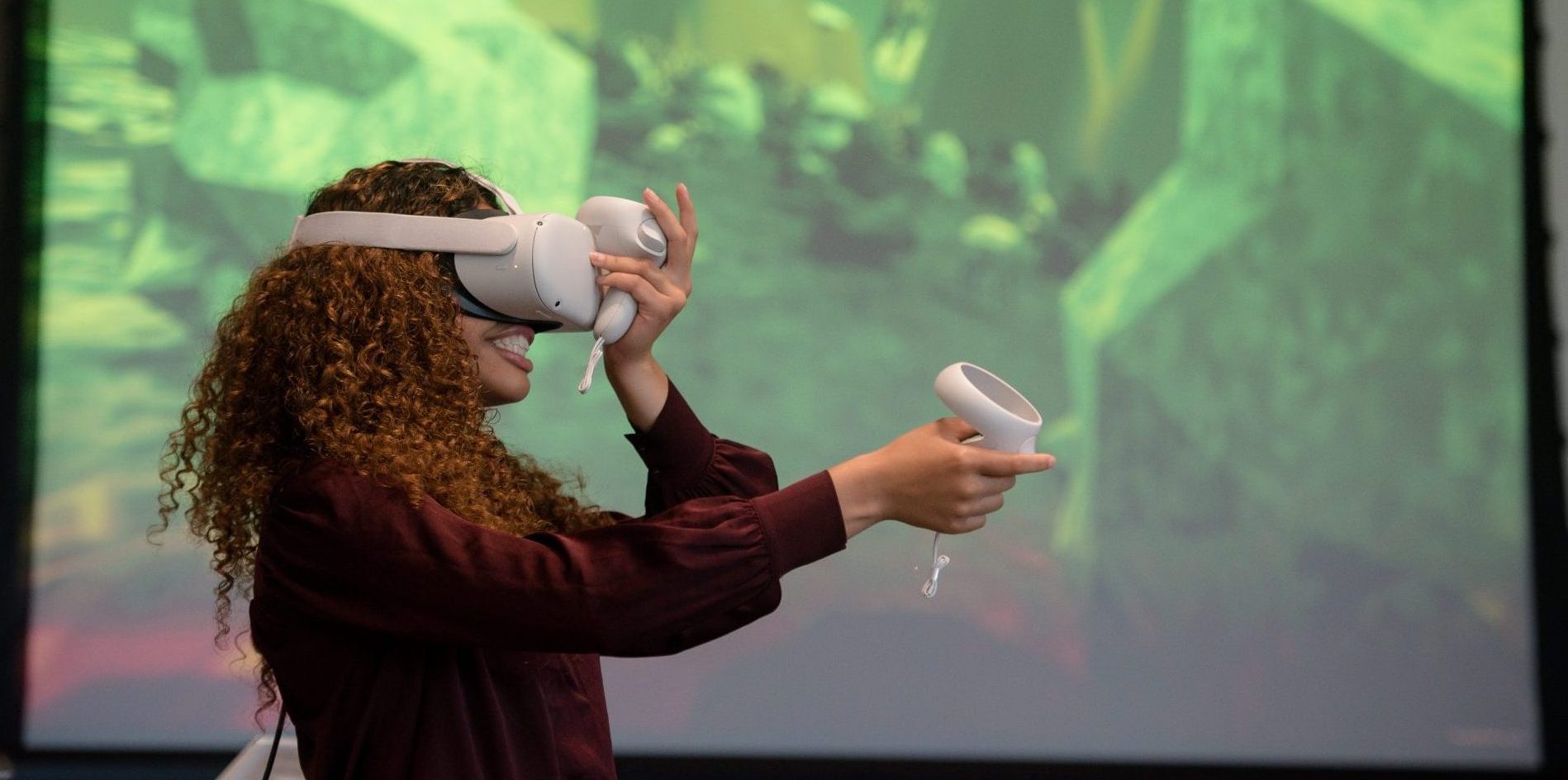
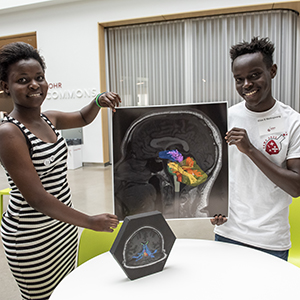
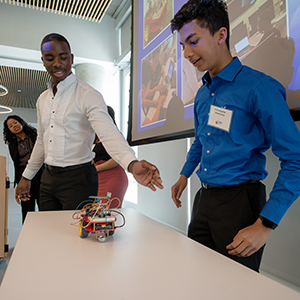
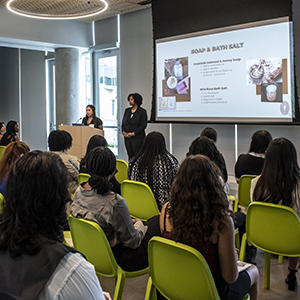
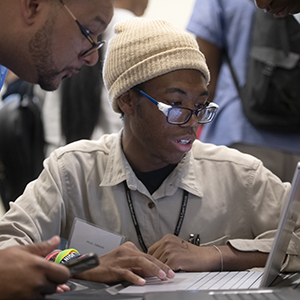
During packed days, students spend their time in courses and meetings focused on quantitative and computational skills. Math and science concepts come to life through intense, hands-on exposure to robotics, computer science, tissue engineering, game theory and more.
The SAMS Transformation
Since the program’s start in 2000, many SAMS students have gone on to become STEM professionals. Each alum has a different story about how SAMS continues to impact their lives to this day.
- DeVynne Farquharson (ENG 2013, 2014, 2019): Initially reluctant scholar
- Evan Moss (ENG 2013): Someone like me
- Chloe Taylor (DC 2008): Education for the future educator
 Attended SAMS 2007 and 2008
DeVynne’s SAMS experience: “I was really hesitant to go and spend my summer at an education camp instead of with friends, but my mom wasn’t on board with that. I had good grades, but my high school didn’t have a lot of rigor. My mom saw it as an opportunity for me to be challenged in a way I wasn’t getting elsewhere. I got to step out of my comfort zone and it opened my eyes to so many possibilities.”
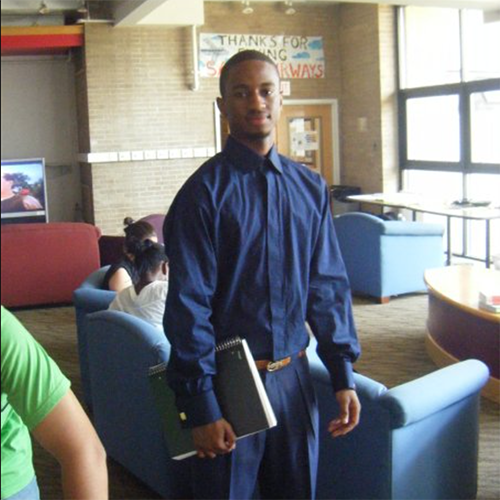 DeVynne’s path revealed: “It opened doors for me. There were talks of scholarships like the Gates Scholarship that I had not even heard of. A year or two later when I was applying to college, I got the Gates Scholarship, and I would never have known about that. The program gave me the confidence that I could do well at a school like CMU — it gave me a strong foundation to succeed and a network to support me.”
Where DeVynne is today: DeVynne is an associate at an energy storage startup that helps utilities transition to cleaner power options. He went on to complete a master’s degree and Ph.D. in engineering fields at CMU. He researched clean air and energy solutions that can help improve health in disadvantaged communities like his hometown.
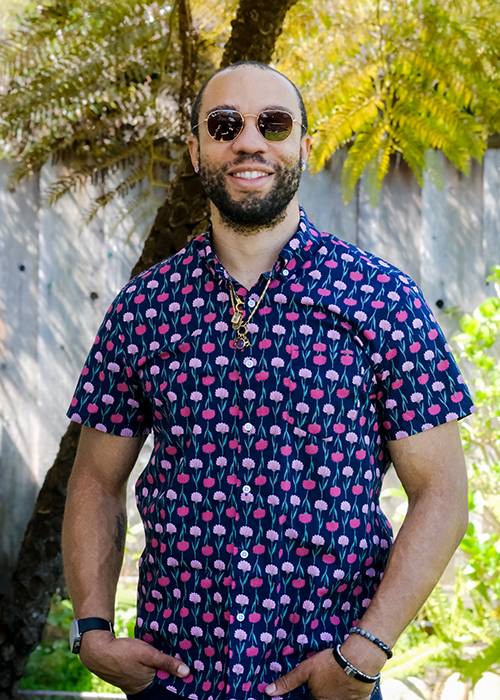 Attended SAMS 2007 and 2008
Evan’s SAMS experience: “The program confirmed for me that I definitely wanted to be an engineer, but more importantly, that was the first time I was surrounded by smart Black kids. I started honors classes or accelerated classes in sixth grade, and that meant I no longer saw Black kids in class.
Some of the smartest people I ever met are folks that I met at SAMS, and that inspired me. I went back to high school with so much more confidence. I knew I could text 50 other SAMS kids who were also the only smart Black kid struggling through their math class, and that made so much of my life better.”
 Evan’s path revealed: “The SAMS experience extends beyond SAMS. Most of the people that I consider close friends now are people that I met in SAMS. Even today, we go back and forth about racial issues, being the only Black person in a science lab or engineering team. There is relief knowing there’s somebody else like me.”
Where Evan is today: At Apple, in the high-end, consumer electronics space as a project manager. He has an extensive background interfacing with engineers and factories around the world, particularly in China and the United States, after earning his mechanical engineering degree from Carnegie Mellon.
 Attended SAMS 2002 and 2003
Chloe’s SAMS experience: “My high school didn’t have many math or science courses, and certainly no tech classes. I was really curious about those topics, but I just didn’t have access. My grades were good in high school, but I did really poorly at the beginning of my first SAMS year because STEM topics were so foreign to me. That summer I ended up discovering robotics and computer science, which I didn’t even know I was interested in.”
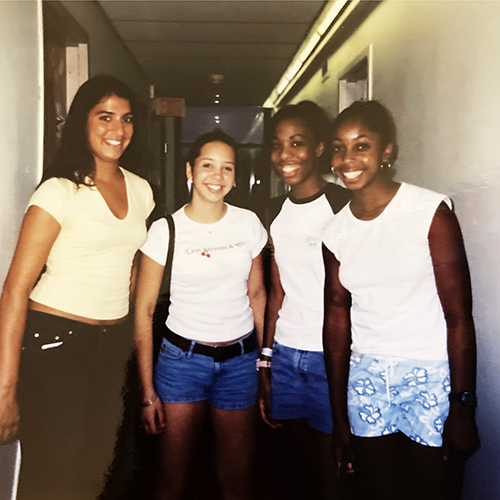 Chloe’s path revealed: “My SAMS experience changed the whole trajectory of my life and career. I went to CMU and ultimately pursued work in education. While working with schools, I quickly realized how incomplete many STEM programs currently are, especially at the elementary and middle school level.”
Where Chloe is today: She’s an entrepreneur in the education space, with a focus on STEM education. She started a company that partners with schools and education programs to build out curriculum around STEM topics. She also wrote “The Big Book of Invisible Technology,” a hands-on guide for children that introduces coding, robotics and 3D modeling, among many other topics. She is also an advocate for equity in the technology industry and a facilitator of the Girls Who Code program.
The SAMS Future
SAMS’s decades of success have been built on the foundational vision of Bill Elliott, CMU’s longtime vice president for enrollment, who saw the impact of the program and invested both institutional resources and his own enthusiasm into the program. In addition, SAMS has been sustained through the personal support of numerous individuals, including alumni and CMU Trustees Larry Jennings and Russ Crockett, as well as corporate and foundation support. Most recently, SAMS received a transformational $3 million grant from the PNC Foundation to endow the program and secure its continued growth and impact into the future.
The funding will allow the program to ensure each and every SAMS participant is college and career ready. For example, the program will be able to expand supplementary coaching for writing a college essay and completing financial aid paperwork, which is valuable for students whose parents never attended college and don’t know what to expect.
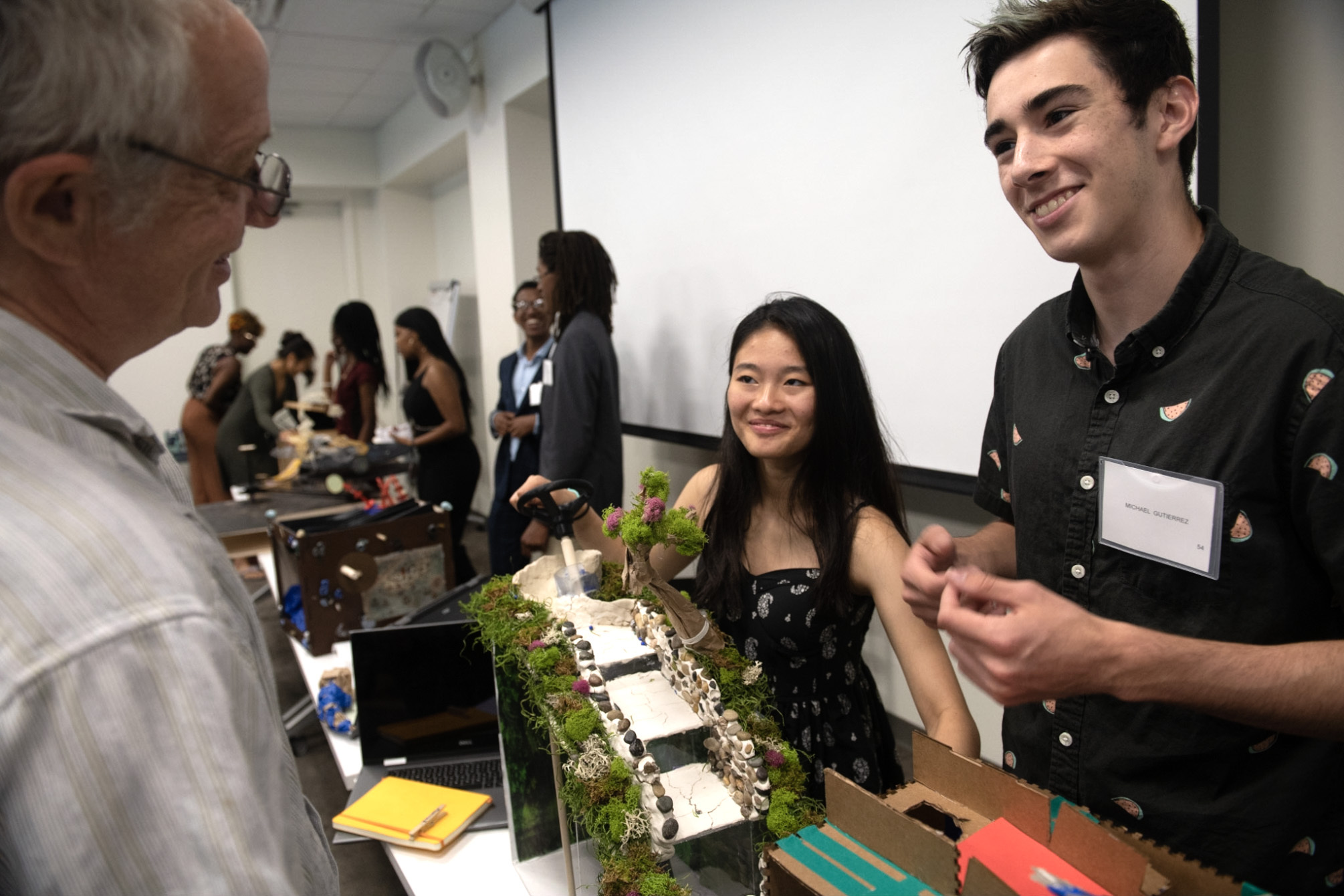
“What the PNC grant extends is the ability for us to stabilize, sustain and even grow the SAMS program,” Smith says. “We’re creating a pathway. We can expand hands-on experiences in labs and maker spaces, and make connections with alumni through master classes. We can now work more closely in a dynamic way with community-based organizations to make stronger connections.”
The goal is to strengthen the already strong results coming from SAMS. Currently, 75% of its participants go on to selective colleges and universities, and nearly 40% pursue undergraduate degrees in STEM. Of SAMS students who enroll at CMU, 70% enroll as STEM majors, and enter their first year with a strong network of friends and campus staff already in place.
Dourado sees these results with the former participants he’s still in touch with. Scores of SAMS alumni have gone on to earn doctorates, succeed in careers and benefit from their cohort’s lifelong connection.
“I think as the program built its reputation, it became known as one of the premier college programs. I always remember [former CMU President] Jared Cohon saying, ‘It’s not about getting to come to Carnegie Mellon, it’s about changing the landscape.’ Through SAMS, we’ve improved the pipeline problem and benefited students and schools all over the country,” Dourado says.
For Smith, the best anecdotal evidence of the program’s enduring success is how many applicants are referred by alumni. She stays in touch with them as they transform into adults who study at top academic institutions, pursue advanced degrees and choose careers in STEM.
“[SAMS] is economic justice and it’s truly life changing,” Smith says.
LEAP, Pre-college for the Humanities
LEAP stands for Leadership, Excellence, Access and Persistence. It shares similarities with SAMS in that it’s a pre-college program, and the grant from the PNC Foundation includes funding for expanding the LEAP program. But, LEAP differentiates itself by being an educational partnership between Carnegie Mellon and Pittsburgh’s City Charter High School that runs during the school year and as part of a school’s curriculum. City High students are drawn from the City of Pittsburgh, but opt-in to the charter school’s rigorous educational approach. CMU brings the full force of its arts, humanities and social sciences expertise to empower students to pursue college education.
Students come to campus monthly for workshops and an annual week-long intensive to explore topics including art, music, writing, performing, psychology and history. Because it’s a partnership that embeds the best of CMU into a student’s high school experience, it’s a program unlike any other in Pittsburgh, and rare on the national landscape as well.
“We have tremendous buy-in from every level at City High, from teachers to counselors to the CEO, so we’re able to support students more fully than if we only interacted with them,” Nico Slate, CMU history professor and LEAP’s faculty director, says. “We’re reaching out to students coming into the 10th grade and working with them all the way through high school and as they transition into college. That multi-year investment in the students is incredibly meaningful.”
Ready to explore SAMS and LEAP further?
Up Next
Closing the Gap
Read Next